Finding old coins with a metal finder and a coin value app has become a well-liked thing to do, letting us touch history, but needing full compliance with the law.
The main goal of going this way is finding coins or other objects, not breaking the law about cultural items, and not going onto other people’s land.
Legal finding always stands on getting permission from the land owner and knowing places where digging is not allowed.
Breaking the rules can lead to money fines or bigger trouble.

Law Rules and Limits
Coin finding is checked by state and local laws. A person using a metal detector must know clearly where their work is allowed and where it is not.
Places Not Allowed
- Finding and digging in these areas is not allowed, and is done only with an open paper given to old-time researchers
- Land of state parks, nature parks, and protected nature areas
- Land pieces are private property, needing written permission from the owner
- Going onto private land without leave is an unlawful action
- Areas of war graves, memory spots, and burial grounds. Searching in such places is seen as wrong
- Areas where pipes or wires go, as breaking them is unsafe and can result in punishment
Places Allowed
Public beaches, not part of history or protected areas.
Farm fields, after getting a clear agreement from the land owner or renter.
Forest areas and public parks if not directly stopped by local rules.
Areas of destroyed or moved settlements, not having the old culture spot status. Checking the status of the area before starting work is a must.
Remembering that finding is allowed only for things not old cultural items is needed.
Finding things in the culture layer without leave is stopped.
In most cases, legal finding means finding things on the top or in the first soil layers, where the culture layer is not there or is broken.
Choosing and Setting Up Gear
The success and lawfulness of the search depend on choosing and knowing how to use the gear correctly.
Metal Finder
- The machine must have a way to sort targets, letting it tell coins and colored metals from iron and trash. This saves time and lowers the number of holes not needed.
- Having an exact VDI helps guess the type of finding before starting to dig. Coins of different metals and sizes have their own clear VDI numbers.
- Choosing a medium-sized search coil gives a good balance between deep searching and being able to tell close targets apart.
Extra Tools
A shovel for digging should be strong and small. Using a small army shovel or a trowel lets you make clean, small holes, which is part of finding manners.
A pinpointer helps find the object fast in the dug soil, lowering the size and depth of the hole. This is especially useful for keeping the culture layer safe.
A GPS device or a GPS app on the phone is used for marking the exact spot of finds and showing the allowed area limits.
Lifehacks for Finding Good Spots
Good searching always starts with looking at the area, not just walking around.
Maps and History Check
Finding disappeared roads, small farms, old rest stops, or old churches on the maps shows places where coins might have been lost.
Looking for facts about old market days, trade roads, and water crossing places is useful.
Places with many people passing in the past often hold lost coins.
Spots where parties or rest happened, or where travellers stopped, can have many small lost things.
Working on the Land
Starting the search from the outside edge and the limits of old settlements or houses. Coins are often lost when leaving the house or going onto the land.
Working the area in a grid, moving in lines running side by side. This makes sure no area is missed.
Having lots of iron or new trash can show the spot of an old building or active life, where old coins might be found besides the trash.
Digging Ways and Find Study
The right digging method is useful for following the law, taking care of the area, and checking it with the best coin identifier app.
Careful Digging Method
Cutting the grass layer in the shape of the letter “U” or a clean square — the grass layer should be raised carefully, not pulling it fully from the ground on one side, just like a lid.
Digging out the soil and checking it with the pinpointer.
The coin must be taken out with the smallest amount of soil moved.
After taking the find out, putting the grass layer back right away, stepping on it firmly. No signs of digging must be left.
Always checking the VDI numbers of the metal finder. Coins give a steady, repeating signal, being different from foil pieces or wire.
What to Do with a Find
- If you find a coin without historical value, it becomes yours.
- If an object is found showing signs of cultural history or being from a time protected by law, you must stop work at once and tell the right people. Hiding a store of goods is breaking the law.
- Check with a coin scanner app to know basic information on it, its specifications, approximate grade, and price.
| Metal and Object Type | VDI Index | Depth in Ground | Chance of Coin |
| Iron, bottle top | 0–10 | Not deep | Low |
| Foil, new trash | 10–25 | Not deep | Low |
| Small copper coins | 30–50 | Up to 15 cm | Medium |
| Large copper or bronze coins | 55–70 | Up to 25 cm | High |
| Silver coins | 70–85 | Up to 20 cm | High |
| Large coins or big colored metal targets | 85–99 | Up to 30 cm and deeper | Medium |
Selling Your Finds
After finding coins, knowing how to sell them to get the right price is needed. The way you sell depends on the coin’s type and value.
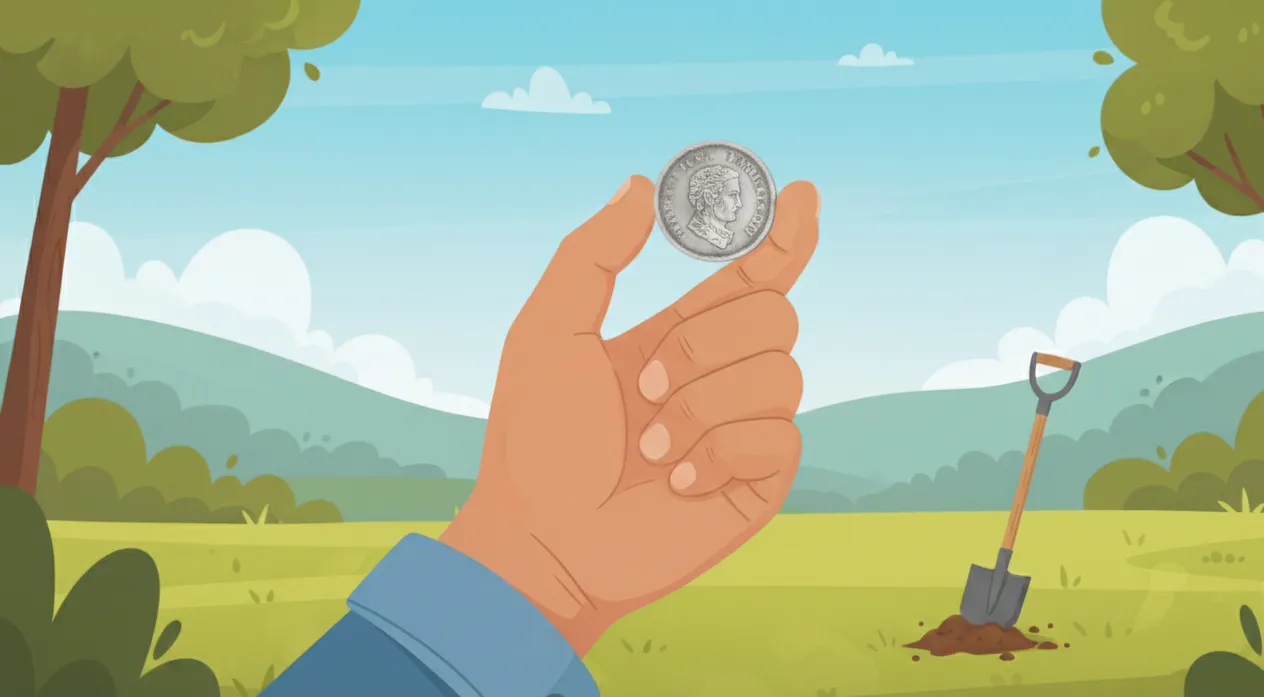
Coin Preparation and Cleaning
Most buyers like the coin as found, having its dirt and look from the ground. So, only removing loose dirt with soft water and a soft brush should be done.
- Not using hard chemicals or tools is a rule; these methods can damage the metal surface forever, greatly lowering the coin’s selling price.
- Keeping the find in a soft holder or box is good, stopping new damage from happening before selling.
Choosing a Sales Platform
Online auction sites have many buyers, making a fair market price possible. Setting a low start price can bring more interest, making the final price higher.
Sending pictures of the coin to well-known coin dealers is another way. These experts can give a quick price offer, saving time if you want to sell fast.
Conclusion
Legal coin finding with a metal finder needs full following of three rules: knowing the law, having permission from the land owner, and following manners.
Good finding stands on checking old maps before, looking for forgotten active spots, and correctly studying VDI signals.
Remembering that finding is allowed only in areas not having the status of a cultural spot is needed.
Following these rules ensures your hobby brings only good feelings and does not lead to law problems.
 adnimda